Limited production luxury apparel promises scarcity, but most brands still restock last season's "limited" drop within a year — VAUDRE never does, and this guide shows you how to tell the difference before you buy in 2026.
- Limited production luxury apparel means a numbered, one-of-one piece that never restocks — verify the production number before buying.
- VAUDRE's model: one piece, one owner, a Piece Nº retired the moment it sells, in 2026.
- A Certificate of Authenticity only matters if it's tied to a specific Piece Nº, not just the brand name.
- Skip any 'limited edition' that won't disclose a fixed unit count — that's marketing, not scarcity.
Why this matters
The phrase "limited edition" gets stamped on runs of 500 units and reissued the following season under a new colorway. That's not scarcity — it's inventory management with better marketing copy.
Real limited production luxury apparel means a fixed, disclosed number of pieces, no reprint, and a paper trail proving it. Vaudre builds its model around that distinction: one piece, one owner, a Piece Nº that's never issued twice, and nothing gets remade once it sells.
If you're spending four or five figures on a garment, you want that distinction on paper before you check out, not after.
Who this is for
This guide is for buyers building a permanent wardrobe, not a seasonal one — collectors who track provenance, resale value, and Piece Nº documentation the way they'd track a watch reference number. If you rotate closets every season and chase trend cycles, limited production luxury apparel isn't solving a problem you have. If you want fewer pieces that hold their position and never show up on someone else's back at the same event, keep reading.
What to look for in limited production luxury apparel
A disclosed, fixed production number
"Limited" without a stated cap is a marketing word, not a fact. A brand that tells you the piece is one of one, or one of twelve, and never revises that number upward, is giving you something verifiable at resale, at insurance appraisal, at estate transfer.
Certificate of Authenticity tied to a Piece Nº
The certificate needs to reference a specific, unique number stamped or sewn into the garment, not a generic brand hangtag. Without that pairing, you can't prove which physical piece the paperwork belongs to five years out.
Handcraft construction, not just handcraft marketing
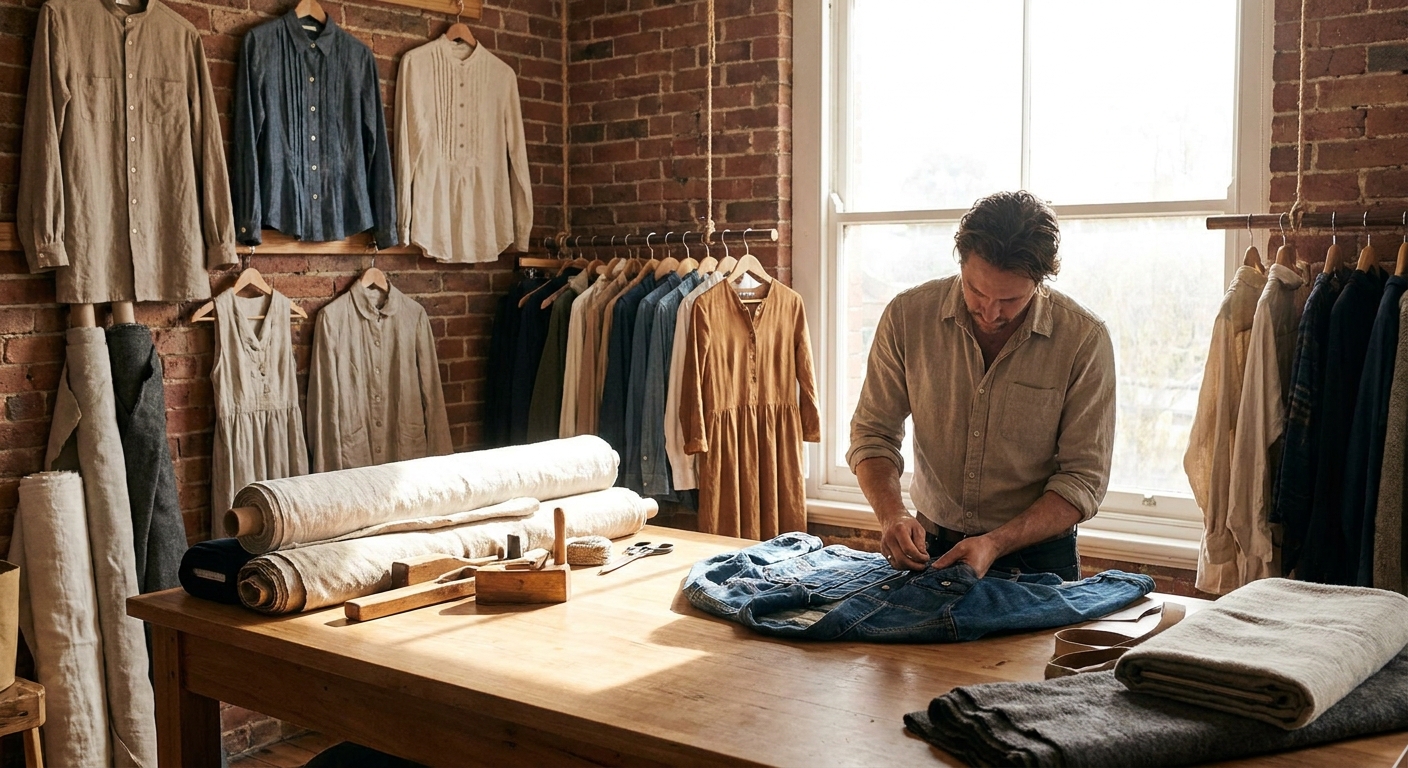
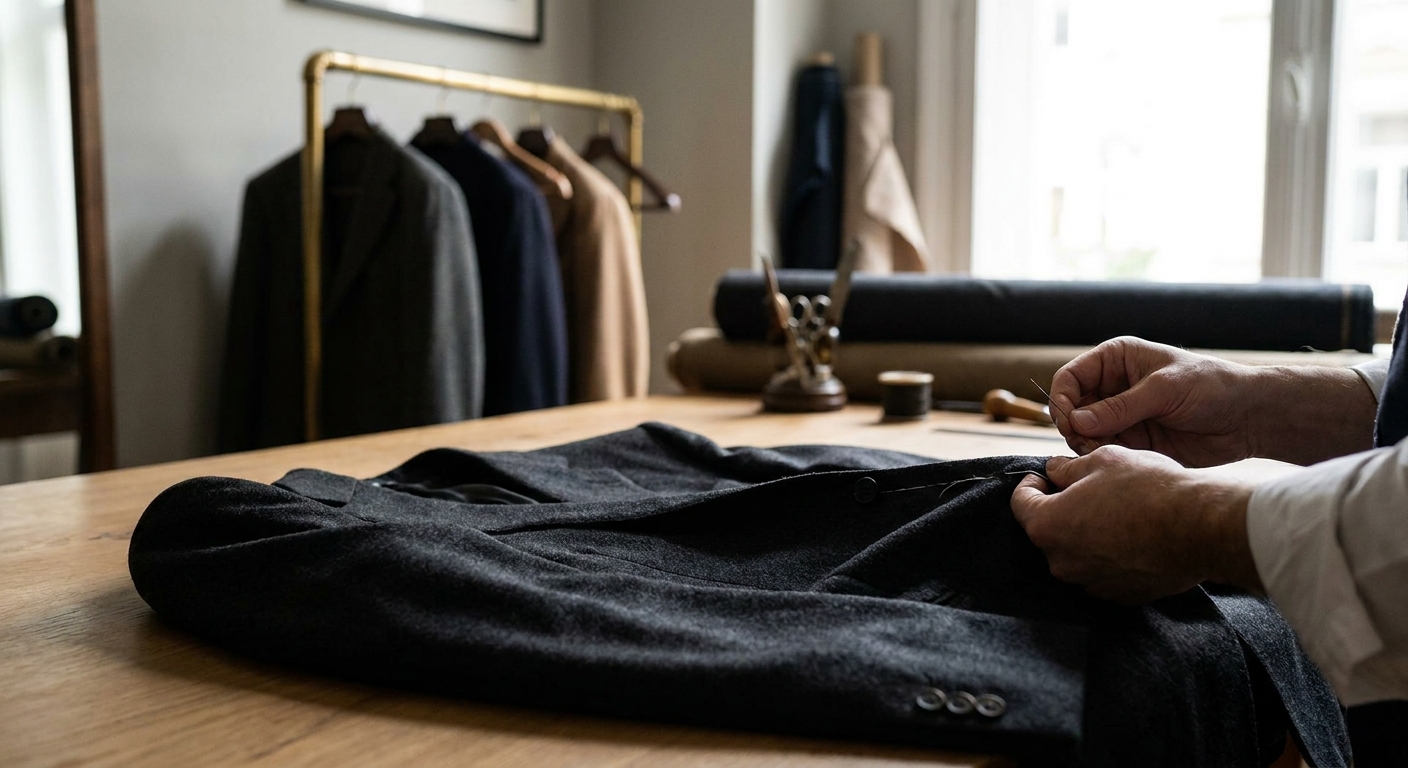
Hand-finished seams, hand-set closures, and atelier-level pattern work take measurably longer than machine runs — that's part of why a true 1-of-1 piece can't be replicated at scale even if a brand wanted to. Ask what's actually done by hand versus what's just described that way in copy.
Never-restocked policy in writing
A brand that says a sold piece "won't be remade" needs to mean it structurally, not as a phrase that quietly reverses when demand shows up. Check whether the policy is a stated business rule or just current inventory status.
Materials sourced for permanence, not a season
Fabric and hardware chosen for a decades-long life reads differently from fabric chosen to survive one wear and a dry-clean cycle. Vague answers on weight, fiber content, and finishing usually mean the garment wasn't built to outlast the trend it's riding.
Resale and provenance trail
If a piece traces back to its Piece Nº and original owner, that's a documented asset. If resale value depends entirely on a platform's word with no numbered record, you're buying speculation, not documentation.
Top picks
The archive pick: handcrafted luxury apparel for collectors. Spec that matters: every piece is finished by hand and carries a Piece Nº that's retired the moment it sells — no reissue, no restock, ever. That's the mechanism behind handcrafted luxury apparel for collectors, and it's the closest thing to a museum-archive model apparel gets in 2026. Verdict: Buy if you want a piece with a paper trail from day one.
The appreciating-asset pick: designer pieces that appreciate in value. Spec that matters: value in this category tracks documented scarcity, not brand hype — a numbered piece with an intact certificate holds its position at resale in a way an unnumbered "limited" item doesn't. Read designer pieces that appreciate in value before assuming any limited tag means the same thing. Verdict: Consider if you're buying with resale or estate planning in mind.
The never-restocked pick: numbered limited edition fashion. Spec that matters: the production run closes the day the last piece sells, and the count doesn't move afterward. Numbered limited edition fashion that never restocks is the cleanest test of whether a brand's scarcity claim is structural or seasonal. Verdict: Buy for anyone who's been burned by a "limited drop" that reappeared six months later.
See what's currently in the archive
Browse the numbered pieces still available before they're claimed.
What to avoid
- "Limited edition" with no stated unit count. If the brand won't say how many were made, assume it's more than you'd want to pay full price for.
- Certificates that reference the brand, not the piece. A certificate that doesn't tie to a specific Piece Nº is a marketing insert, not documentation.
- Restock language buried in fine print. "While supplies last" and "never remade" are not the same promise — read the actual policy, not the ad copy.
Verdict comparison
| Criteria | Handcrafted apparel for collectors | Designer pieces that appreciate in value | Numbered limited edition fashion |
|---|---|---|---|
| Fixed production number | Yes | Yes | Yes |
| Certificate tied to Piece Nº | Yes | Yes | Yes |
| Handcraft construction | Yes | Varies by piece | Yes |
| Resale documentation | Strong | Strongest | Moderate |
| Verdict | Buy | Consider | Buy |
FAQ
What is limited production luxury apparel?
Limited production luxury apparel is a garment made in a fixed, disclosed quantity that's never reissued once sold. VAUDRE's version goes further: one piece, one owner, and a Piece Nº retired permanently at sale.
How is limited production different from limited edition?
Limited edition often means a marketing label with no stated unit count, while limited production means a documented, fixed number that's never revised upward. Check for a Piece Nº and Certificate of Authenticity to tell the two apart.
Is numbered luxury apparel a good investment in 2026?
Numbered pieces with intact provenance documentation hold resale position better than undocumented "limited" items in 2026. Value depends on the certificate matching the physical Piece Nº, not on the brand name alone.
What makes VAUDRE different from a typical limited drop?
VAUDRE structures scarcity as policy, not inventory status — each piece is numbered, handcrafted, and never remade once claimed. A typical limited drop can quietly reissue a style once demand returns.
How do you verify a Certificate of Authenticity?
Confirm the certificate references the specific Piece Nº stamped or sewn into the garment, not just the brand name. A certificate without a matching unique number can't prove which physical piece it belongs to.
Does limited production luxury apparel hold resale value?
Pieces with a documented production cap and Piece Nº hold resale value better than undocumented limited runs. Resale strength tracks provenance, not the word "limited" on the tag.
How much does numbered one-of-one apparel typically cost?
Pricing varies by piece, construction, and materials, so check current listings directly rather than assuming a fixed range. What stays constant is the documentation: a numbered piece with a certificate should cost more than an undocumented "limited" one of similar construction.
Can a numbered piece ever be remade?
No — under a true one-of-one model, a sold piece is retired and its Piece Nº is never issued again. If a brand remakes a "numbered" style, the number was never a real production cap.
One last thing
Most "limited edition" luxury drops name a print run in the thousands, not the tens — the giveaway is a batch code, not a marketing line calling it rare. Before you pay full price for anything labeled limited production luxury apparel in 2026, ask for the unit count in writing. If the seller hesitates, that's your answer.