Buying handcrafted luxury apparel as a collector means separating garments that will only ever have one owner from mass releases wearing the word "exclusive" as a marketing sticker. This guide breaks down the criteria that actually matter, the categories worth collecting, and the traps that catch even experienced buyers in 2026.
- Numbered, never-remade construction is the baseline for handcrafted luxury apparel — anything reissuable is not 1-of-1.
- A Certificate of Authenticity with a Piece Nº designation is non-negotiable before paying collector prices in 2026.
- Skip 'limited edition' drops with reissue clauses; true one-of-one pieces never return to production.
- Hand-finishing detail and traceable materials separate archive-grade garments from marketing-only 'artisan' claims.
Why this matters
The word "exclusive" has been diluted by every fast-fashion brand running a 500-unit "limited" drop. A real collector needs a firmer standard than a marketing adjective.
VAUDRE builds around a narrower promise: one piece, one owner, never remade once sold. That's the bar this guide measures against, and it's the bar worth applying to any handcrafted luxury apparel purchase in 2026, regardless of maker.
Misreading this distinction costs money. A garment marketed as "limited" that gets reissued in a different colorway next season isn't a collectible — it's inventory with a story attached.
Who this is for
This guide is for the buyer acquiring pieces as much for permanence and provenance as for wear — someone who wants a garment's history documented, not just its silhouette photographed. If you're comparing a numbered overcoat against a seasonal drop from a mainstream house, or trying to figure out whether "handcrafted" on a label means anything beyond a hangtag, this is written for you.
What to look for in handcrafted luxury apparel for collectors
Numbering and provenance documentation
A genuine 1-of-1 garment carries a unique identifier — a Piece Nº, a serial mark, something that ties the physical object to a single production record. Without it, "handcrafted" is an adjective, not a fact.
Collectors should expect this number to be searchable or verifiable, not just stitched into a label for atmosphere. If a maker can't produce a record matching the number, the claim doesn't hold.
Never-remade guarantee
The entire value proposition of one-of-one apparel collapses the moment a piece can be reordered. Ask directly: once this sells, does the exact design return in any form?
A true archive house answers no. Anything softer — "we might revisit the silhouette" — signals the piece is a limited run, not a singular one.
Hand-finishing and construction detail
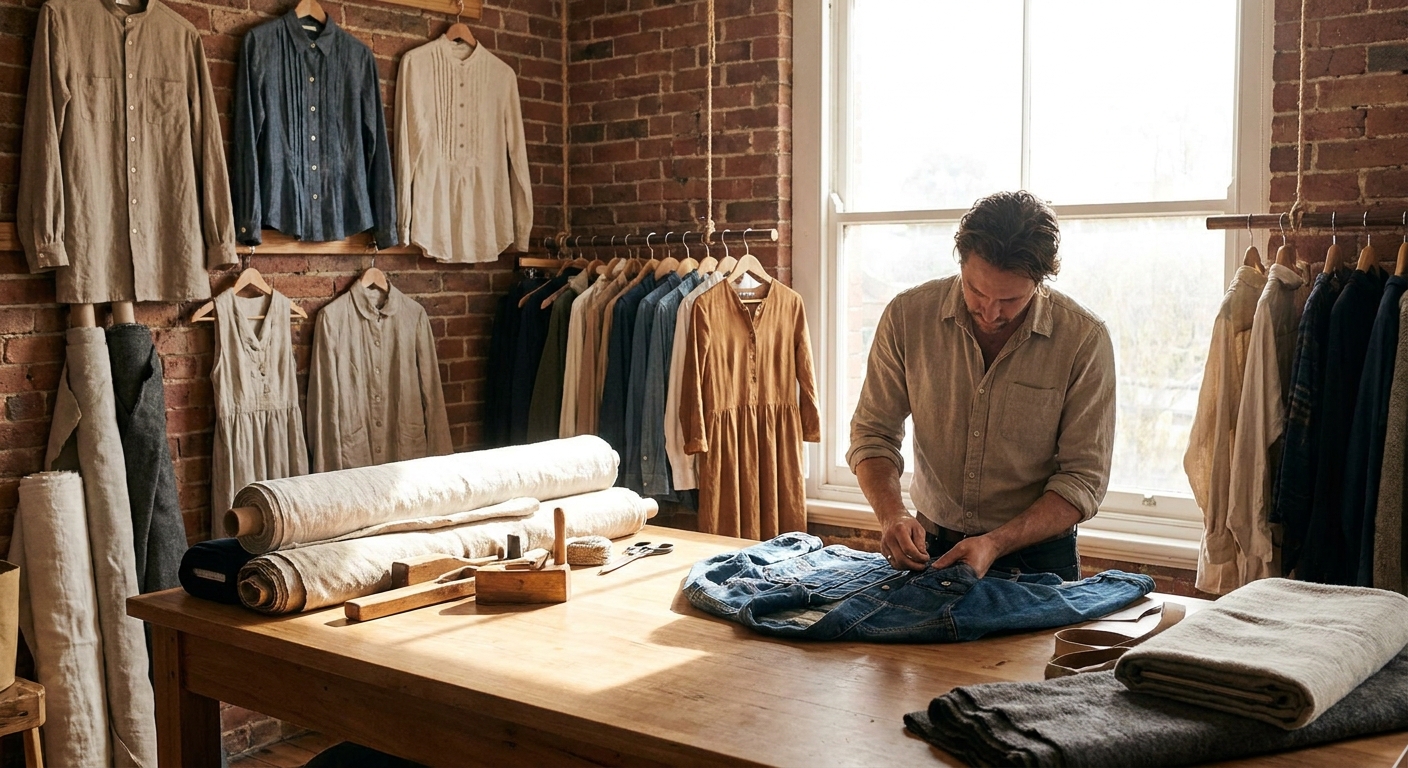
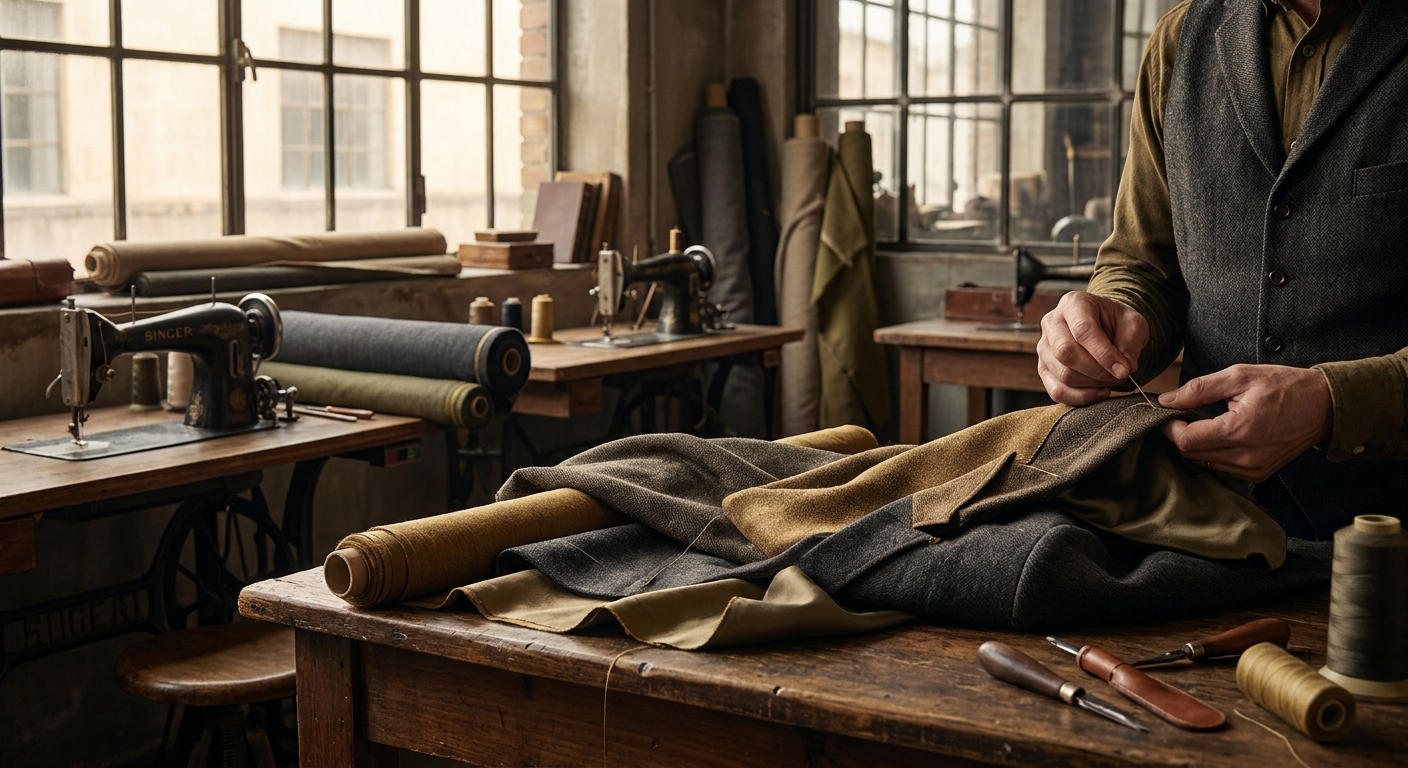
Machine-run seams, factory topstitching, and templated patterns are not the same as hand-finished construction. Collectors should look for irregularities that prove human hands did the final pass — hand-felled seams, hand-set buttonholes, asymmetries that a machine wouldn't produce.
This matters because it's the physical evidence behind the price, not the story behind it.
Material sourcing and traceability
A garment claiming rare or archival fabric should be able to name the mill, the fiber origin, or at minimum the fabric composition with specificity. Vague language ("finest materials") without a traceable source is a red flag on any piece positioned as collector-grade.
Certificate of Authenticity
A Certificate of Authenticity tied to the Piece Nº is the paper trail that protects resale value and estate transfer down the line. Without it, provenance dies with the original buyer's memory.
Fit consultation or made-to-measure process
Handcrafted apparel built around a single owner should involve some level of fit consultation — measurements, a sizing dialogue, or a made-to-order process. A one-size-fits-all approach to a supposedly one-of-one garment contradicts its own premise.
Categories worth collecting
Rather than chasing specific SKUs that vanish the moment they sell, collectors should think in categories. Here's how the main ones stack up.
The Numbered Overcoat — the anchor piece. Outerwear carries the most visible hand-finishing (structured shoulders, hand-set linings) and holds provenance value longest because it's worn publicly and photographed. Buy if documentation and Piece Nº tracking are confirmed.
The Archive Blazer — the versatile pick. Tailoring reveals construction quality fastest; a hand-padded canvas front is easy to feel and hard to fake with a machine run. Buy for collectors building a rotation piece with archival weight.
The Statement Knit — the wildcard. Knitwear is harder to authenticate by touch alone, so documentation matters more here than construction inspection. Consider only with a verified Certificate of Authenticity in hand.
The Evening Piece — the occasion buy. High detail, high price, lowest rotation — this is a collector's piece, not a daily-wear investment. Consider if provenance and never-remade status are airtight; otherwise Skip.
See the current numbered pieces
Browse what's still available before it's claimed and archived permanently.
What to avoid
- "Limited edition" with a reissue clause. If the fine print allows a future run in a new colorway, it's not one-of-one — it's a controlled drop.
- "Artisan" language without a name attached. A garment described as handcrafted but with no traceable maker, mill, or atelier reference is marketing copy, not provenance.
- Numbering without a matching record. A Piece Nº that can't be verified against any documentation is decorative, not authenticating.
Verdict comparison
| Category | Provenance clarity | Hand-finishing visibility | Verdict |
|---|---|---|---|
| Numbered Overcoat | High — worn and photographed publicly | High — visible in shoulders, lining | Buy |
| Archive Blazer | High — tailoring reveals construction fast | High — canvas front, hand padding | Buy |
| Statement Knit | Moderate — needs documentation to confirm | Low — hard to authenticate by touch | Consider |
| Evening Piece | High — but lowest rotation value | High — most labor-intensive detail | Consider/Skip |
FAQ
What is handcrafted luxury apparel?
Handcrafted luxury apparel is clothing produced with hand-finished construction techniques rather than fully automated manufacturing, often in small or single-unit production runs. In 2026, the strongest version of this claim comes paired with a numbered identifier and a Certificate of Authenticity.
Is one-of-one apparel worth the price?
It's worth the price when the piece carries verifiable provenance — a Piece Nº, documentation, and a genuine never-remade guarantee. Without those, you're paying a premium for a story with no paper trail behind it.
How do I verify a garment is truly one-of-one?
Ask the maker to match the piece's serial number or Piece Nº against a production record, and confirm in writing that the exact design will never be reissued. If they can't produce either, treat the 1-of-1 claim skeptically.
What's the difference between limited edition and numbered pieces?
Limited edition typically means a capped run of multiple identical or near-identical units, sometimes with a reissue clause buried in the fine print. Numbered pieces in the true sense mean one physical garment tied to one production record, never repeated.
Does handcrafted luxury apparel hold resale value?
Resale value tracks documentation, not just craftsmanship — a piece with a Certificate of Authenticity and clear provenance transfers value to a new owner far more reliably than one without paperwork. Construction quality matters, but the paper trail is what protects the price at resale.
How much does handcrafted luxury apparel cost in 2026?
Pricing varies significantly by category, maker, and construction complexity, with evening pieces and outerwear typically commanding the highest prices due to labor intensity. Check current availability and pricing directly on the maker's site rather than relying on secondhand estimates.
Can numbered pieces be restocked or remade?
No — a genuine numbered, one-of-one piece is never restocked or remade once sold, which is the core distinction from a limited edition run. If a maker offers to "remake" a sold piece in any form, the numbering claim is not being honored.
What documentation should come with a collector-grade garment?
At minimum, expect a Certificate of Authenticity tied to a unique Piece Nº and some record of the garment's construction or material sourcing. This documentation is what separates a collectible from clothing with a good story attached.
One last thing
The detail collectors miss most often: a Piece Nº only means something if it's tied to a record someone can produce on request. A number stitched into a label with no verifiable file behind it is theater, not provenance — ask for the record before you ask about the fabric.