Numbered limited edition fashion means something specific: a single, serialized garment that exists once, sells once, and gets archived — not a 500-piece drop with a hangtag that says "limited." This guide breaks down what separates the real thing from marketing copy, and how to evaluate a piece before you commit.
- True numbered limited edition fashion means one owner per piece, not one owner per production batch.
- VAUDRE issues each garment with a Piece Nº and no reissue policy — buy it and it's gone from the archive.
- A Certificate of Authenticity with a matching serial number is non-negotiable for 2026 buyers.
- Skip anything labeled 'limited' with a unit count over 50 — that's scarcity marketing, not scarcity.
- Documentation and construction quality matter more than the story printed on the tag.
Why this matters
The word "limited" got diluted years ago. Fashion brands slap it on capsule collections that run into the thousands, then quietly restock the popular sizes six months later. That's inventory management with a scarcity narrative attached, not numbered limited edition fashion in the literal sense.
The actual category — pieces produced once, numbered once, never remade — is small. VAUDRE operates entirely inside it: handcrafted 1-of-1 apparel for men and women, each piece numbered, each piece retired from production the moment it sells. No restock. No second run in a different colorway. In 2026, that model is rare enough that most shoppers don't know how to evaluate it.
Who this is for
This guide is for collectors building a wardrobe around provenance rather than logo recognition, for gift buyers who want something the recipient will never see duplicated at a dinner party, and for anyone tired of "limited edition" meaning 3,000 units sold through four regions. If you care whether a garment can be replaced, this applies to you. If you're comparison-shopping seasonal drops for the best discount, it doesn't — numbered 1-of-1 pieces don't discount and they don't come back.
What to look for in numbered limited edition fashion
True 1-of-1 versus a numbered batch
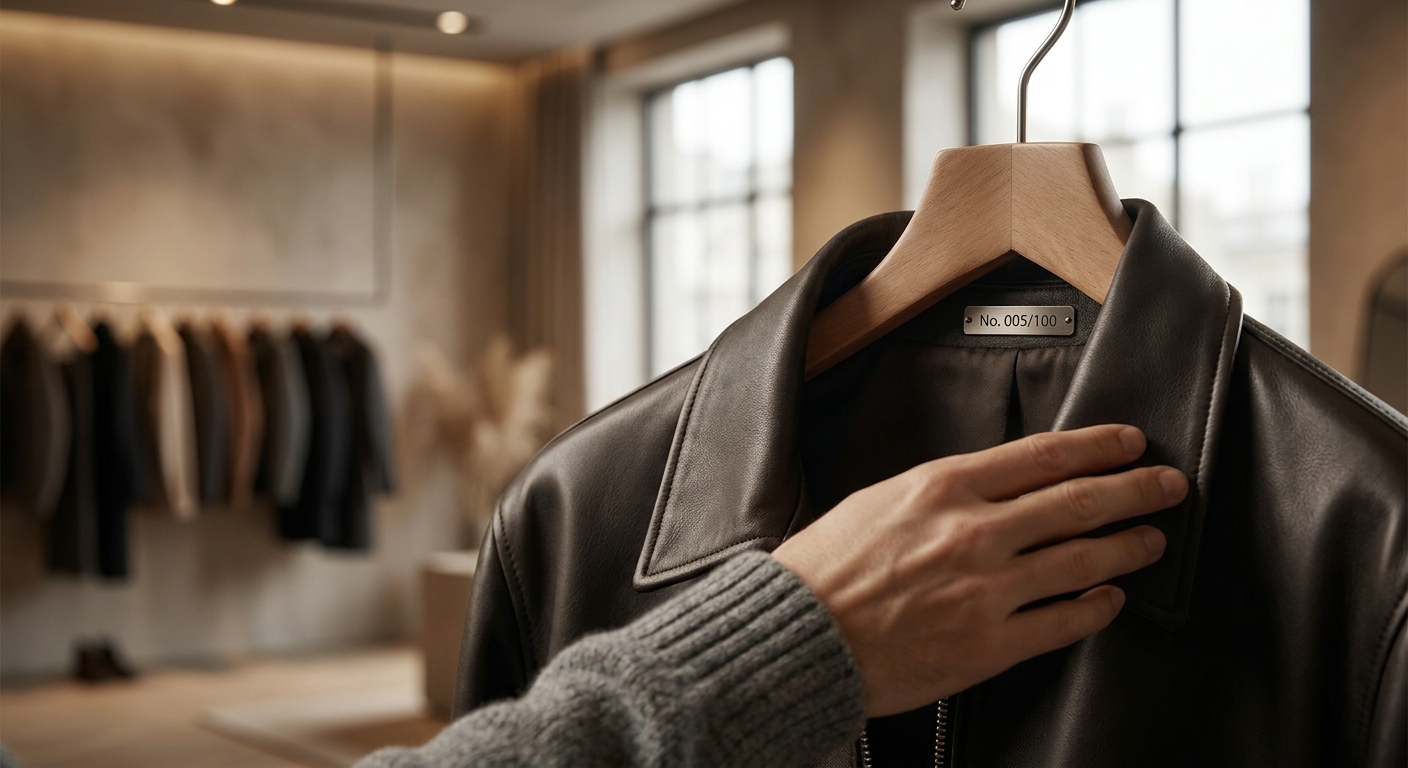
A lot of "numbered" fashion is really a numbered batch — piece 12 of 200 is still one of 200. Ask what the second number means. If it's anything higher than 1, you're buying into a run, not a singular object. VAUDRE's numbering reads as Piece Nº 1/1 on every garment, meaning the denominator never changes.
Documentation that matches the piece
A Certificate of Authenticity should carry the same serial number as the garment, not a generic collection code. This is the paper trail that makes resale and estate value possible decades later. Without it, "numbered" is just a print on a label.
A stated no-remake policy
The brand should say, in plain language, that the piece will not be remade in another size, colorway, or material once it sells. If that language is missing or vague, assume it can come back. If the piece can be restocked, it was never truly one-of-one.
“If the piece can be restocked, it was never truly one-of-one.”
Hand-finishing you can verify
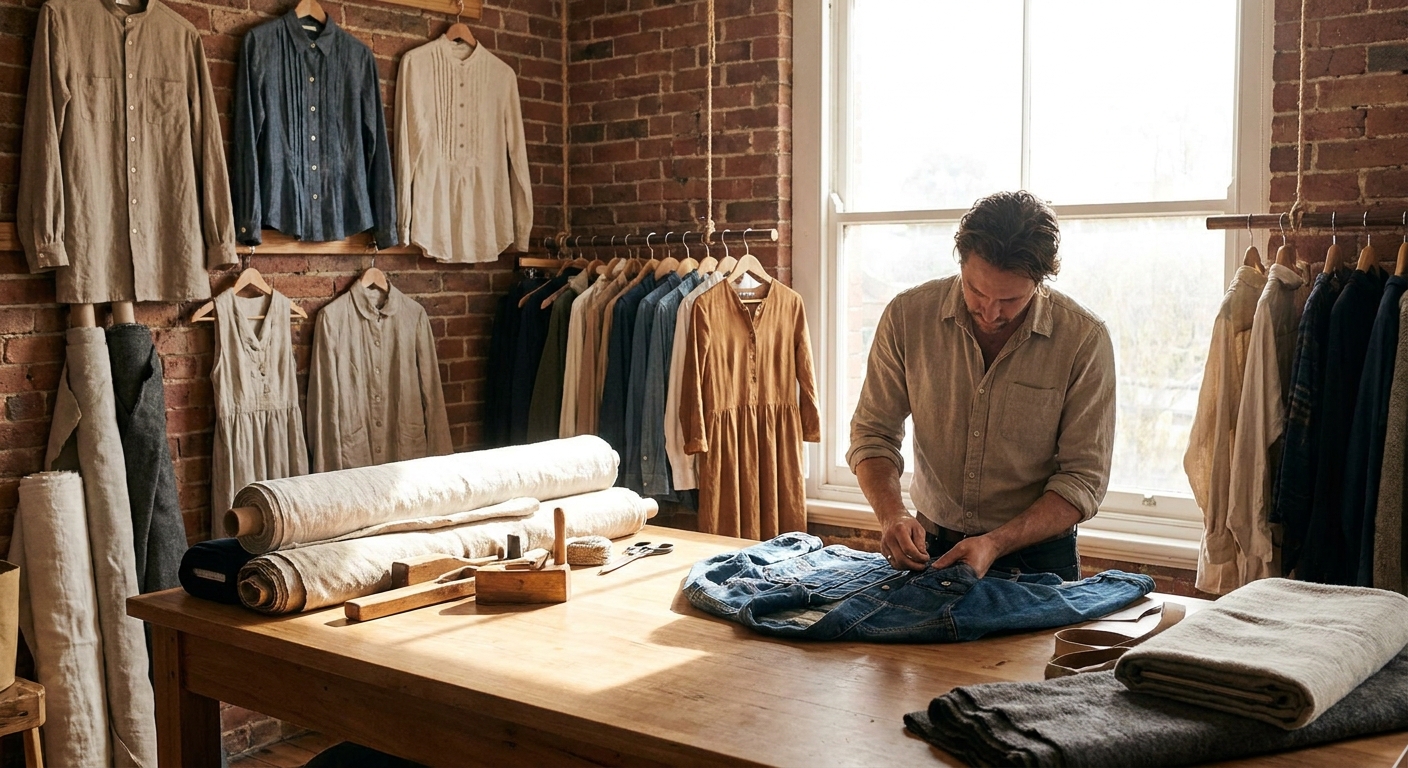
Numbered limited edition fashion should show construction detail that a factory run of 500 units can't justify economically — hand-felled seams, matched grain on leather, hand-set closures. Photos of the interior finishing tell you more than the marketing copy on the front.
Fit transparency without a safety net
Because there's no restock, sizing information has to be exact — measurements, not just S/M/L. A house selling 1-of-1 pieces should publish garment measurements, not just size labels, because there's no second chance to exchange for a different size once the piece is claimed.
Archival tracking over time
Ask whether the brand tracks which pieces have sold and which remain. An archive that shows a piece as "claimed" the moment it sells is doing real inventory discipline. An archive that still shows sold-out pieces as available months later is not.
See what's currently unclaimed
Browse the numbered pieces still available in the VAUDRE archive.
How to choose your first numbered piece
The safe pick — outerwear. A single-owner coat or jacket carries the most visible construction detail per dollar, and it's the easiest category to verify fit from measurements alone. One garment, one number, no second production run. Buy if the measurements match your frame and the finishing photos show hand-felled seams.
The wildcard — tailored eveningwear. Numbered tailoring is harder to evaluate remotely because fit tolerance is tighter than outerwear. It rewards buyers who already know their exact measurements down to the half-inch. Consider it if you've had a garment custom-fitted before; skip it as a first purchase if you haven't.
The gift pick — accessory capsules. Smaller numbered pieces (scarves, small leather goods) carry lower fit risk and still come with the same Piece Nº and certificate. Buy for a first gift into the category — it's the lowest-risk entry point.
The one to research first — anything cross-labeled "collaboration." Numbered collaborations sometimes blend a designer's 1-of-1 language with a partner brand's batch production. Read the fine print on unit count before assuming it's singular. Consider, but confirm the denominator before paying.
What to avoid
- "Limited edition" runs over 50 units. Anything with a production count that high is scarcity marketing, not scarcity — genuine numbered limited edition fashion in 2026 tends to run in the single digits to low dozens per style, and true 1-of-1 work is exactly one.
- Certificates without matching serials. A generic authenticity card that doesn't reference the specific garment number is decoration, not documentation.
- Resale listings claiming exclusivity with no provenance. If a secondhand seller can't produce the original certificate and serial match, treat the exclusivity claim as unverified.
Verdict comparison
| Category | Uniqueness | Documentation | Remake policy | Verdict |
|---|---|---|---|---|
| True 1-of-1 house pieces (e.g. VAUDRE) | One owner, ever | Serial-matched certificate | Never remade | Buy |
| Numbered batch drops (10-50 units) | Shared numbering pool | Often generic certificate | Sometimes reissued | Consider |
| Mass "limited edition" collabs (500+ units) | Effectively unlimited | Rarely serialized | Frequently restocked | Skip |
FAQ
What does numbered limited edition fashion actually mean?
It means each garment is produced once and carries a unique serial number tying it to a single owner. In 2026, the term gets misused for batch runs of hundreds of units, so check the denominator on the numbering before assuming true singularity.
Is a 1-of-1 piece the same as a limited edition drop?
No. A limited edition drop usually means dozens to thousands of identical units; a 1-of-1 piece, like those from VAUDRE, means exactly one garment exists and is never remade once sold.
How much does numbered limited edition fashion cost compared to standard luxury?
Pricing varies by house and category, so check current listings directly rather than assuming a fixed premium. The cost reflects hand-finishing and the fact that the piece can never be reordered.
Can you return a numbered 1-of-1 garment?
Return and exchange terms vary by seller, so review the specific policy on the product page before purchase. Because there's no restock, sizing accuracy matters more here than with standard inventory.
Does a numbered piece hold resale value?
Provenance and a matching Certificate of Authenticity are what support resale and archival value over time. Without documentation tying the certificate to the exact serial number, resale claims are difficult to verify.
How do I know if a 'limited edition' is really one-of-one?
Check the numbering format directly on the garment or listing. If you see a fraction like 1/1, that's a true single piece; anything with a denominator above 1 is a batch, not a singular item.
What's the difference between a numbered edition and a serialized production run?
A serialized production run assigns sequential numbers to many identical units. A numbered edition in the strict 1-of-1 sense assigns one number to one unique garment that will never be duplicated.
Why don't 1-of-1 brands restock popular pieces?
Restocking would contradict the core promise: one piece, one owner. A house built around Piece Nº designations and archived sold items, like VAUDRE, treats the no-remake policy as the entire value proposition, not a marketing line.
One last thing
The detail most buyers miss: the moment a numbered 1-of-1 piece sells, it moves from "available" to "archived" in the house's own records — not deleted, not hidden, just marked permanently claimed. That archival step is what separates a real numbered limited edition fashion house from a brand renting the word "limited" for a season. Check whether a seller keeps that kind of public record before you buy in 2026 — most don't, and the ones that do are worth paying attention to.