Exclusive numbered fashion pieces for women mean a garment carries a fixed number, one owner, and no reissue — this guide covers what to verify before you buy and where four numbered-piece paths actually stand in 2026.
- Exclusive numbered fashion pieces for women need a Certificate of Authenticity and a visible Piece Nº, not just a small print run.
- Vaudre sells each numbered piece once and never remakes it — confirm that policy before paying a premium in 2026.
- Vaudre's current numbered collection for women is the safest entry point for new collectors in 2026: Buy.
- Skip anything marketed as 'limited edition' with no retired-number record — that's scarcity language, not 1-of-1 production.
Why this matters
"Limited edition" gets stamped on everything from sneaker collabs to department-store capsules, and most of it prints in batches nobody ever counts out loud. Exclusive numbered fashion pieces for women work on a different premise: one garment, one number, one buyer, no second run once it sells.
Vaudre builds its catalog on that premise — every piece is handcrafted, numbered, and retired the moment someone claims it. That's a different transaction than a "limited" drop from a mainstream label, and it changes what you check before paying a premium in 2026.
Who this is for
This guide is for a woman building a wardrobe around permanence, not turnover — someone who already owns her designer staples and wants pieces that won't surface on someone else's feed next season. It's not for a shopper chasing the fastest resale flip or five colorways of the same silhouette. If you want a garment with a number attached to your name and no one else's, keep reading.
What to look for in exclusive numbered fashion pieces for women
1. Certificate of Authenticity and Piece Nº documentation
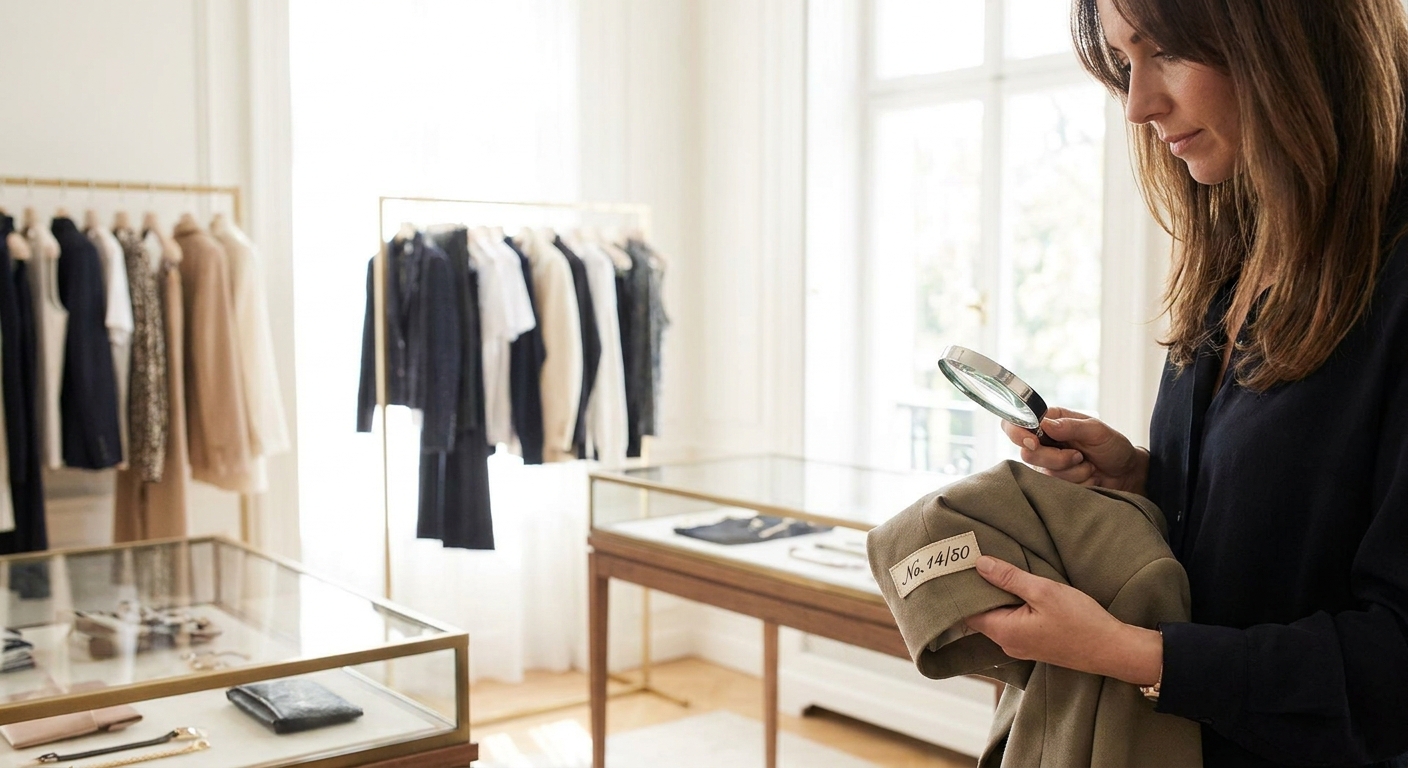
A number stitched into a label means nothing without paperwork behind it. The piece needs a matching Certificate of Authenticity tying that exact Piece Nº to a production record, not a generic care tag. Without that pairing, "numbered" is decoration, not provenance.
2. A confirmed never-restocked policy
Ask the house directly whether the exact piece can return in a new colorway or fabric next season. Numbered, limited-edition fashion that never restocks is a fundamentally different product than a "limited" run that quietly reappears eighteen months later under a new SKU. If the maker can't confirm the piece is retired for good, the number is decorative.
3. Handcraft construction over machine batch production
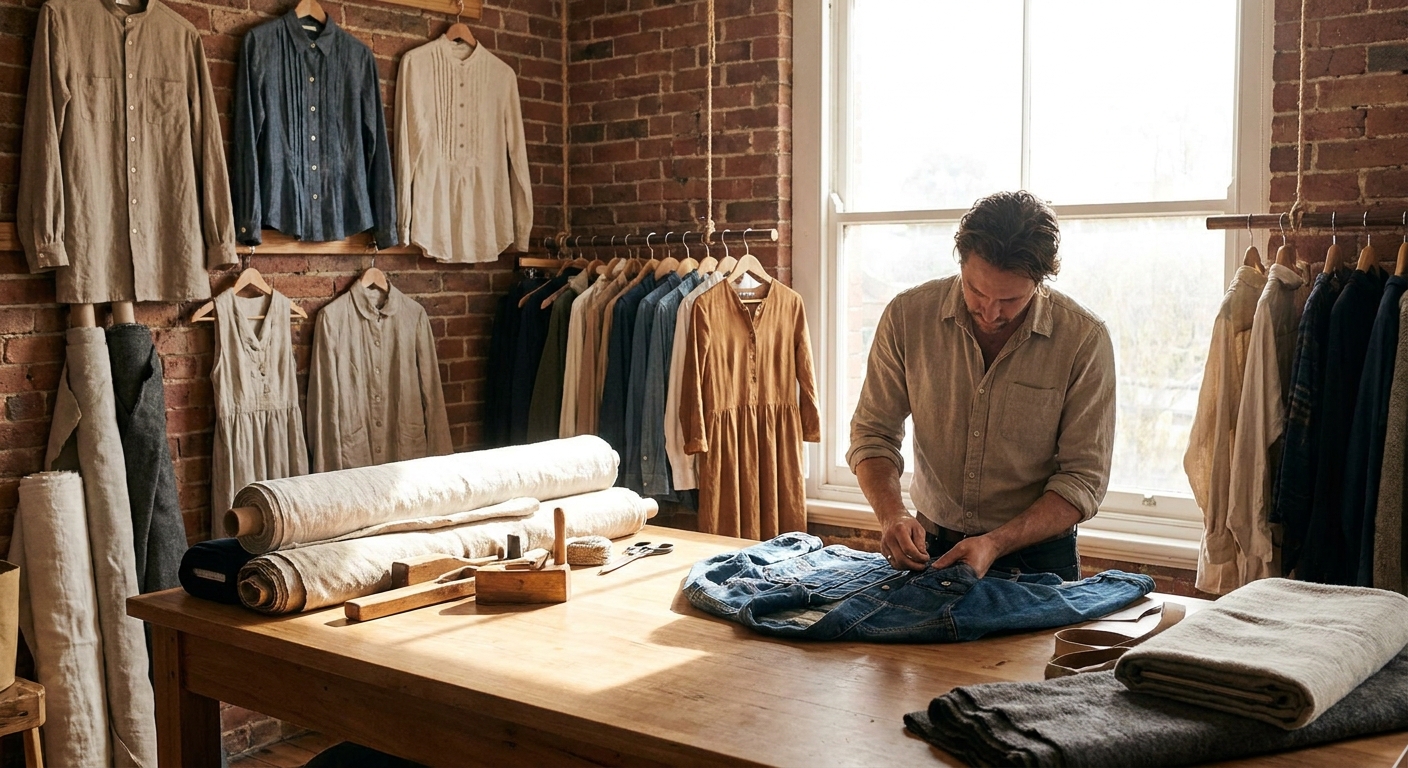
A true 1-of-1 piece is cut and finished by hand, which means seam placement, hem weight, and closures vary slightly from any duplicate silhouette in the same collection. Machine batch production can still carry a printed number, but the construction gives it away — identical topstitching across supposedly unique pieces is a tell.
4. Fit built for wear, not display
Some numbered pieces are engineered for editorial photography, not a real body moving through a real day. Check seam allowances, lining weight, and closures meant for actual wear — a piece you'll only photograph once isn't worth a permanence premium.
5. Resale and archive value
A numbered piece with a documented archive entry retains meaning even after you're no longer the owner; an undocumented "exclusive" piece is just a used garment. Ask whether the house maintains a public or private archive record tied to the Piece Nº.
6. Release cadence and waitlist transparency
Houses that drop numbered pieces on a predictable, disclosed cadence let you plan; houses that spring "surprise exclusives" to create urgency are usually manufacturing scarcity rather than reporting it. Transparency about how many pieces exist in a given release, even loosely, matters more than the marketing copy around it.
See the current numbered collection
Every piece carries one number and one owner, retired once it sells.
Top picks for 2026
The entry piece — Buy. For a first purchase, look at the current numbered collection rather than chasing an archived piece that's already sold. Designer pieces that appreciate in value walks through why a fresh Piece Nº from an active run tends to hold its meaning better than a secondhand claim on something already retired. One owner, zero remakes: Buy if the silhouette fits your wardrobe now.
The archive study — Consider. Before buying anything, spend time with handcrafted luxury apparel for collectors to understand construction standards you should expect at this price tier. It's not a purchase decision on its own, but it recalibrates what "handcrafted" should actually look like up close. Consider it required reading, not required buying.
The full wardrobe build — Buy, for committed collectors. Building a wardrobe entirely around one-of-one pieces takes longer than a normal shopping cycle, since each piece sells once and doesn't come back. Collectors who plan two or three numbered pieces per year, rather than one impulse purchase, get a more coherent wardrobe by the time they've claimed five or six pieces. Buy into the approach if you're thinking in years, not seasons.
The impulse "exclusive" buy — Skip. Generic online drops labeled "exclusive" with no Piece Nº, no Certificate of Authenticity, and no retired-run confirmation are the opposite of what this category promises. Many of these lines still print in the hundreds despite the marketing language. Skip unless the seller can show you the exact documentation described above.
What to avoid
- "Limited edition" without a retirement record. If the brand can't confirm the exact piece is gone for good, it isn't 1-of-1 — it's a marketing tier.
- Numbered tags on batch-produced garments. A printed number on a machine-made piece from a run of several hundred is inventory tracking, not provenance.
- Collaboration capsules sold as "exclusive." Multi-brand capsule drops often ship in the low thousands globally; that's scarcity marketing dressed up as scarcity.
Verdict comparison
| Path | Documentation | Construction | Retention value | Verdict |
|---|---|---|---|---|
| Entry piece (current run) | Certificate + Piece Nº | Handcrafted | High — one owner, retired on sale | Buy |
| Archive study | Reference only | Handcrafted | N/A — not for sale | Consider |
| Full wardrobe build | Certificate + Piece Nº per piece | Handcrafted | High over time | Buy |
| Impulse "exclusive" drop | None confirmed | Often machine batch | Low | Skip |
FAQ
What makes exclusive numbered fashion pieces for women different from limited edition?
A numbered piece carries a specific Piece Nº and a Certificate of Authenticity tied to one buyer, and it's retired for good once sold. "Limited edition" often just means a smaller batch that can still print again under a new run.
Is a numbered piece worth more than a regular designer piece?
It can hold more meaning over time because no duplicate exists once it sells, but value depends on documentation and whether the house confirms the piece is retired. A numbered tag with no paperwork behind it isn't worth a premium.
How do I verify a piece is actually 1-of-1?
Ask for the Certificate of Authenticity matched to the exact Piece Nº and confirm directly with the house that the specific piece will never be remade in 2026 or afterward. Construction details like hand-finished seams are a secondary check, not a substitute for documentation.
Can numbered pieces be resold?
Yes, and a documented Piece Nº with an archive record retains its identity through resale, unlike an undocumented "exclusive" garment. The number and certificate are what a buyer is actually paying for at resale.
How often does Vaudre release new numbered pieces?
Release cadence varies by collection, and each piece within a release carries its own number and sells once. Check the current collection directly for what's active in 2026 rather than relying on secondhand listings.
Do numbered pieces come in standard sizing?
Fit varies by piece since each garment is handcrafted rather than machine-batched to a uniform spec. Confirm measurements against the specific Piece Nº you're considering rather than assuming standard size charts apply.
What's the difference between a numbered piece and a capsule collaboration?
A numbered piece is produced once, tied to a single owner, and never remade, while a capsule collaboration is typically a multi-piece run marketed as exclusive but still produced in batches. The retirement policy is the dividing line, not the marketing copy.
Should I buy a numbered piece as an investment?
Treat retention value as a byproduct of documentation and construction, not a guarantee — buy the piece because you want to wear it, with resale potential as a secondary benefit. A Certificate of Authenticity and confirmed retirement improve the odds, but neither promises a return.
One last thing
The real test of a numbered piece isn't the price tag — it's whether the maker can show you the exact number is retired. A house that hands you a Piece Nº and a Certificate of Authenticity but can't confirm the piece won't reappear next season under a slightly different name is selling you a story, not a 1-of-1 garment. In 2026, ask for the retirement confirmation before you ask about fit.